
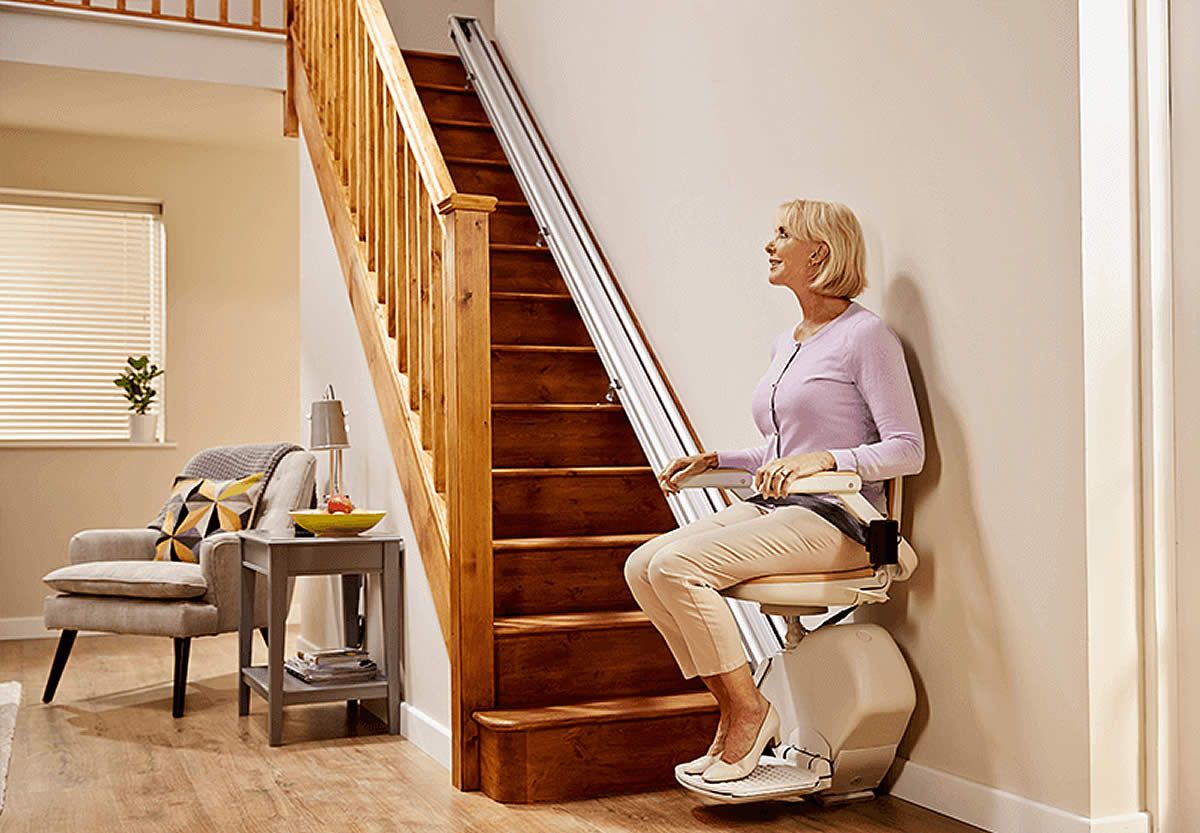
Narrow Stairs Do Not Automatically Rule Out a Stairlift
One of the most common reasons homeowners assume they cannot get a stairlift is staircase width. They look at their stairs, decide there is not enough room, and stop researching before they have the full picture.
In most cases, that assumption is wrong.
Stairlift technology has advanced considerably, and today’s narrowest-profile models are built specifically for staircases that older or standard units could not accommodate. If you have a staircase you think is too narrow, this guide will help you understand what the actual width requirements are, which stairlift types work in tight spaces, and what you need to confirm before scheduling an installation.
Clark Elevator serves Miami homeowners and building owners across the full range of vertical mobility needs, including stairlift installation for homes where standard access solutions do not fit. If you have been told your stairs are too narrow, it is worth getting an accurate assessment before writing off the option entirely.
How Wide Do Stairs Need to Be for a Stairlift?
This is the question most homeowners ask first, and the answer depends on the stairlift model.
As a general rule, most stairlifts require a minimum stair width of 28 inches measured from wall to wall or banister to wall. Some compact models designed specifically as a stairlift for narrow stairs can work in staircases as tight as 24 to 26 inches.
Here is what those measurements mean in practical terms:
| Stair Width | Stairlift Compatibility |
| Under 24 inches | Very limited; custom assessment required |
| 24 to 27 inches | Narrow-profile or stand up stairlift models only |
| 28 to 35 inches | Most standard stairlift models compatible |
| 36 inches and above | Full range of stairlift options available |
How to measure your stairs correctly: Measure the clear width of the staircase at the narrowest point, which is often where a newel post, handrail bracket, or wall trim reduces the usable space. Do not measure at the widest point and assume the whole staircase matches. A stairlift installer will take multiple measurements during an in-home assessment, but knowing your approximate width before you call saves time.
Stair width is not the only measurement that matters. Stairlift rail systems mount to the stair treads, not the wall, so the width of each tread, the angle of the staircase, and the ceiling height at the top landing all factor into whether a specific model will work in your home.
Types of Stairlifts for Narrow Staircases
Understanding the types of stairlifts available helps you identify which product category fits your staircase and your physical needs.
Straight Stairlifts
The most common configuration. Straight stairlifts run on a single rail mounted to the stair treads and work on staircases with no curves or intermediate landings. They are available in standard and narrow-profile versions.
For narrow stairs, manufacturers offer slim-seat models with folded footrest and armrest dimensions that keep the rail close to the wall and leave more of the staircase clear for others to pass. Most straight narrow-profile units fold to a total width of 11 to 14 inches when not in use.
Best for: Staircases 26 inches or wider with a straight run from bottom to top landing.
Curved Stairlifts
Curved stairlifts use a custom-bent rail built to the exact dimensions of a specific staircase. They handle turns, intermediate landings, and split-level configurations that straight models cannot.
Curved stairlifts are more expensive than straight models because each rail is custom fabricated. They are also available in narrow-profile configurations, though the options are more limited than for straight staircases.
Best for: Staircases with curves, turns, or landings that a straight rail cannot follow.
Perch or Stand Up Stairlift
A stand up stairlift, also called a perch stairlift, replaces the standard seat with a narrow padded perch that the user leans against rather than sits on fully. This configuration has two significant advantages for narrow staircases.
First, the reduced seat depth means the unit takes up less horizontal space on the staircase when in use. Second, a stand up stairlift is often recommended for users who have difficulty bending their knees to a full seated position, making it a practical choice for people with hip or knee replacements, arthritis, or limited joint mobility.
The perch unit still folds when not in use and leaves the staircase largely unobstructed for other household members.
Best for: Staircases 24 to 28 inches wide, or users with limited knee or hip flexion who cannot comfortably use a standard seated stairlift.
Outdoor Stairlifts
If the narrow staircase in question leads to a porch, deck, or exterior entry, outdoor-rated stairlifts are available in both straight and perch configurations. These units are built with weatherproof components and coated rails designed to handle moisture, temperature variation, and UV exposure. In Miami’s climate, that durability matters more than in most markets.
Best for: Exterior staircases, split-level entries, or porches with limited width.
What Affects Stairlift Compatibility Beyond Width
Stair width is the starting point, but several other factors determine whether a specific unit will work safely and comfortably in your home.
Staircase angle. Most stairlifts are designed for staircases with an angle between 20 and 45 degrees. Staircases steeper than 45 degrees require specialist equipment and assessment. Very shallow angles can also create issues with rail mounting.
Ceiling height at the top of the stairs. The user must be able to stand at the top landing without the ceiling being too low. On staircases with a sloped ceiling directly above the upper landing, the stairlift’s mounting configuration may need to be adjusted or a specific model selected.
Doorways at the top or bottom of the staircase. If a door opens directly onto the staircase at either end, the rail and parked stairlift must not block the door swing. Most rails can be configured with a hinge mechanism that folds the lower section of rail to keep doorways clear.
Weight capacity. Standard stairlifts typically support 250 to 300 pounds. Heavy-duty models are available up to 400 to 600 pounds. The weight rating must match the user’s needs, and this is non-negotiable from both a safety and warranty standpoint.
Stair tread condition. Rails mount to the stair treads, not the wall. Treads that are damaged, uneven, or structurally compromised may need repair before installation. Clark Elevator’s installers assess tread condition during every home survey.
Power source. Most stairlifts run on standard 110-volt household current. Installation typically requires a dedicated outlet at the top or bottom of the staircase. Battery-powered models charge continuously from the outlet and continue to operate during power outages, which is a practical consideration for Miami homeowners during hurricane season.
The Installation Process: What to Expect
Understanding what installation involves helps you prepare your home and set realistic expectations for the timeline.
Step 1: In-home assessment. A Clark Elevator technician visits your home to measure the staircase, assess the physical environment, evaluate the user’s mobility needs, and recommend compatible models. This assessment is free and takes 30 to 60 minutes. Do not purchase a stairlift without an in-home assessment. Measurements taken remotely or by the homeowner alone are not reliable enough to guarantee a correct fit.
Step 2: Model selection and order. Based on the assessment, we recommend one or more compatible models. Straight stairlifts are often available as stock units and can be installed quickly. Curved stairlifts require custom rail fabrication, which typically adds two to six weeks to the lead time.
Step 3: Installation day. Most straight stairlift installations are completed in two to four hours. The rail mounts to the stair treads using brackets that do not require cutting into walls or structural modification. The unit is then mounted to the rail, wired to the power source, and tested through its full range of operation.
Curved stairlift installation takes longer due to the custom rail configuration and typically requires a half day or full day depending on the complexity of the staircase.
Step 4: User training. Before leaving, our installer walks the user and household members through full operation of the stairlift, including how to use the controls, fold and unfold the seat and footrest, use the remote call and send functions, and what to do if the unit stops unexpectedly.
Step 5: Post-installation support. Clark Elevator provides warranty coverage on parts and labor and supports ongoing service needs after installation. If something does not perform as expected after the job is done, we are reachable and accountable.
Cost of a Stairlift for Narrow Stairs
Stairlift pricing varies based on the type of unit, staircase configuration, and any home modifications required.
| Stairlift Type | Typical Cost Range (Installed) |
| Straight standard stairlift | $2,500 to $5,000 |
| Straight narrow-profile stairlift | $3,000 to $6,000 |
| Stand up / perch stairlift | $3,000 to $5,500 |
| Curved stairlift (custom rail) | $8,000 to $15,000+ |
| Outdoor stairlift | $3,500 to $7,000 |
Does insurance cover stairlifts? Medicare does not cover stairlifts as durable medical equipment under standard benefit rules. Some Medicare Advantage plans include home modification benefits that may cover partial costs. Medicaid coverage varies by state. Veterans may be eligible for stairlift assistance through VA home modification programs. Always verify current coverage with your insurer or benefits coordinator before making a purchase decision based on assumed reimbursement.
Reconditioned and rental options. For homeowners with budget constraints or short-term needs, reconditioned straight stairlifts are available at lower cost. Rental programs are a practical option for post-surgical recovery situations. Ask Clark Elevator about current availability and what warranty and service terms apply to reconditioned units.
Questions to Ask Before You Buy
The right questions at the start of the process protect you from purchasing a unit that does not fit your staircase, your physical needs, or your budget.
Is this model compatible with my exact stair measurements?
Do not accept a general compatibility answer. The installer should confirm that the specific model being recommended has been verified against the measurements taken in your home.
Will the stairlift block the staircase for other household members when in use?
In narrow staircases, this matters. Ask what the clearance is between the unit in use and the opposite wall or banister, and whether someone could safely pass on the stairs while the lift is operating.
What happens at the top and bottom landings?
Confirm that the rail configuration leaves doorways clear and that the parked unit does not block access to adjacent rooms or hallways.
What is the warranty and what does it cover?
Get the full warranty terms in writing before signing anything. Understand what is covered, for how long, and what the process is for a warranty service call.
How long will the installation take and what preparation do I need to do?
Knowing the timeline and any prep requirements, such as clearing the staircase and ensuring outlet access, helps the installation day go smoothly.
Are reconditioned or rental units available?
If cost is a concern, ask directly whether these options are available and what the difference in warranty and service terms looks like compared to new units.
How Clark Elevator Approaches Stairlift Installation in Miami
Clark Elevator has built its reputation in Miami on reliable workmanship and honest assessments, whether the job involves a commercial elevator in a Brickell high-rise or a stairlift in a single-family home in Coral Gables.
Our approach to stairlift installation is the same as our approach to everything else we do.
Accurate assessment before any recommendation. We measure your staircase correctly, account for all the variables that affect compatibility, and recommend a model we are confident will work in your specific home. We do not sell you a unit and figure out the fit later.
Clear explanation of options. If your staircase is narrow, we will tell you exactly which configurations are viable, what the trade-offs are between them, and what the installed cost looks like for each option. No pressure and no upselling.
Clean installation with no damage to your home. Our installs do not require cutting into walls, removing banisters, or structural modification. We leave your home the way we found it, minus the mobility barrier.
Ongoing support after the job is done. If something is not right after installation, Clark Elevator is reachable and will make it right. That accountability is part of what we offer Miami homeowners alongside the hardware.
Stairlifts are one part of a broader commitment to helping Miami residents and property owners maintain safe, functional access throughout their homes and buildings. If you have been putting off this decision because you were not sure your stairs would qualify, the right next step is a free assessment, not more guesswork.
Ready to Find Out If Your Stairs Qualify?
Narrow stairs are the most common reason homeowners delay a stairlift decision longer than they should. In most cases, a narrow-profile seated model or a stand up stairlift can be fitted to staircases that seem too tight at first glance.
The only way to know for certain is an accurate in-home assessment.
Contact Clark Elevator to schedule a free stairlift assessment for your Miami home.
[Schedule Your Free Assessment with Clark Elevator →]
FAQs: Stairlifts for Narrow Stairs
What is the minimum stair width for a stairlift?
Most stairlifts require a minimum stair width of 28 inches. Narrow-profile and stand up stairlift models can work in staircases as tight as 24 to 26 inches. Staircases under 24 inches require a specialist assessment to determine whether any unit is viable.
How wide do stairs need to be for a stairlift if someone needs to pass by while it is in use?
For a household member to safely pass on the stairs while the stairlift is in use, a stair width of at least 36 inches is generally recommended. On narrower staircases, passing while the unit is operating is typically not possible, though the folded unit leaves most of the staircase clear when not in use.
What is a stand up stairlift and who is it best for?
A stand up stairlift uses a padded perch instead of a full seat, allowing the user to lean against it rather than sit fully. It works in narrower staircases than most seated models and is also recommended for people who have difficulty bending their knees or hips to a full seated position due to joint conditions or recent surgery.
What are the main types of stairlifts available?
The main types of stairlifts are straight stairlifts for single-run staircases, curved stairlifts for staircases with turns or landings, perch or stand up stairlifts for narrow stairs or users with limited joint mobility, and outdoor stairlifts for exterior staircases. Each type is available in configurations suited to different stair widths and user needs.
Can a stairlift be installed without modifying walls or banisters?
In most cases, yes. Stairlift rails mount to the stair treads using brackets and do not require cutting into walls or removing banisters. However, if a banister or newel post reduces the usable stair width below the minimum required for a specific model, some modification may be needed. Clark Elevator’s installers identify any obstacles during the in-home assessment.
How long does stairlift installation take?
Straight stairlift installation typically takes two to four hours. Curved stairlift installation, which uses a custom-fabricated rail, usually takes a half day to a full day. The timeline also depends on any electrical work needed to add or relocate an outlet near the staircase.
Does Medicare cover stairlifts?
Standard Medicare does not cover stairlifts. Some Medicare Advantage plans include home modification benefits that may provide partial coverage. Veterans may qualify for assistance through VA home modification programs. Medicaid coverage varies by state. Verify current benefits with your insurer before assuming coverage.
What is the weight limit for a stairlift?
Standard stairlifts typically support 250 to 300 pounds. Heavy-duty models are available that support 400 to 600 pounds. Selecting a model with the appropriate weight rating is a safety requirement. Clark Elevator confirms the correct rating for every installation during the in-home assessment.
Can a stairlift work during a power outage?
Most modern stairlifts use a battery system that charges continuously from a standard household outlet. This allows the unit to continue operating during a power outage for several cycles. This is a meaningful consideration for Miami homeowners during hurricane season. Confirm the battery backup specifications of any model you are considering.
How do I know if my stairs are too narrow for a stairlift?
The only reliable way to know is an in-home assessment with accurate measurements taken by a qualified installer. Staircases that appear too narrow based on a visual check are frequently found to be compatible with narrow-profile or stand up models once measurements are confirmed. Contact Clark Elevator for a free assessment before ruling out your staircase.