
You may know that your elevator is getting older, but deciding how much money to set aside for modernization is much harder than recognizing that an upgrade is coming. One contractor may recommend replacing the controls and door equipment, while another proposal includes the machine, fixtures, wiring, cab work, and additional building upgrades.
That difference in scope is why searching for an average elevator modernization cost can produce numbers that are tens or even hundreds of thousands of dollars apart. Modernizing a low-rise hydraulic elevator is not the same project as upgrading a traction elevator serving a multi-story commercial building, and even two similar elevators can require different work once their existing equipment is evaluated.
Underestimating the project can leave your property facing unplanned capital expenses, change orders, extended downtime, or another major repair shortly after the modernization is complete. Overspending on components that do not yet need replacement can be just as problematic.
Understanding what actually drives elevator modernization costs can help you build a more realistic budget, compare proposals more carefully, and determine which upgrades make sense for the elevator you have.
What Does Elevator Modernization Typically Cost?
There is no single reliable price that applies to every modernization project.
As a broad 2026 planning range, many commercial elevator modernization projects can fall anywhere from approximately $50,000 to $200,000 or more per elevator, depending on the equipment and scope. More comprehensive traction and high-rise projects can reach $200,000 to $300,000 or considerably more per car.
Industry cost guides illustrate just how much scope changes the number. Current estimates place some controller-focused modernizations around $50,000 to $90,000, while complete modernization projects involving major mechanical equipment can reach $120,000 to $400,000 or more.
These figures should be used for early budgeting, not as a substitute for an equipment-specific proposal.
The most important question is not simply, “How much does elevator modernization cost?” It is, “What needs to be modernized on this particular elevator?”
A $70,000 proposal replacing controls and fixtures cannot be compared directly with a $170,000 proposal that also includes a hydraulic power unit, doors, wiring, cab work, and other major components.
The Scope of Work Has the Biggest Effect on Price
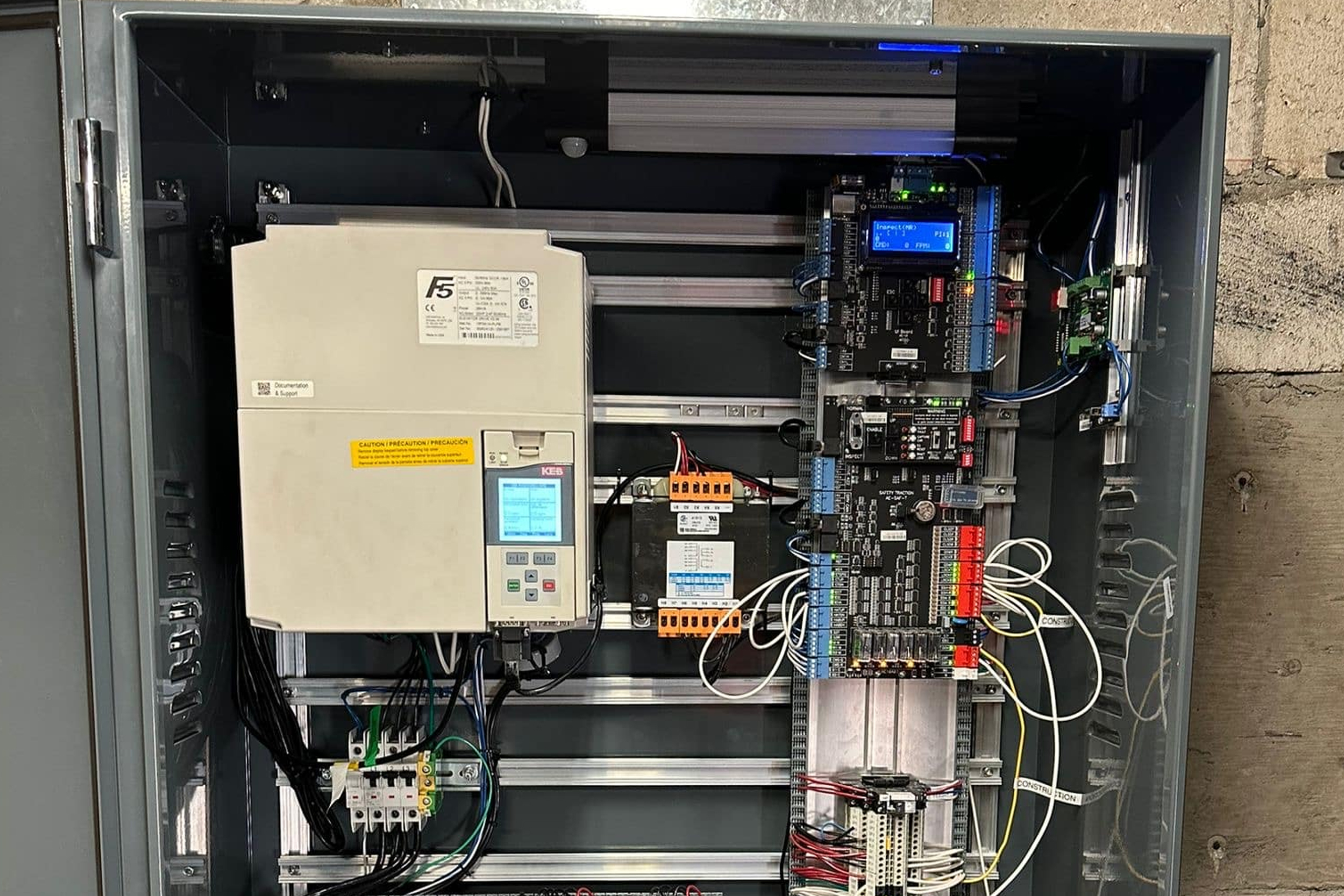
Modernization does not always mean removing everything and starting over.
Some elevators need targeted upgrades because several major components remain in acceptable condition. Others have multiple aging systems that make a broader modernization more practical.
A project could include:
- Controller replacement
- Drive or hydraulic equipment upgrades
- Door operators
- Hall and car fixtures
- Electrical wiring
- Safety-related equipment
- Machine or motor work
- Hydraulic pump and valve equipment
- Hydraulic jack or cylinder work
- Cab finishes and lighting
- Communication equipment
- Accessibility-related improvements
- Work required to satisfy applicable codes and inspections
The more systems included in the project, the higher the cost generally becomes.
This is also why owners should request detailed proposals. A single total at the bottom of a quote does not tell you enough. You should be able to identify which components are being replaced, which will remain, and what work is optional.
Hydraulic and Traction Elevators Have Different Modernization Costs
The type of elevator in your building strongly influences both the work required and the budget.
Hydraulic Elevator Modernization
Hydraulic elevators are commonly found in lower-rise properties. A modernization may involve the controller, pump unit, valve, door equipment, fixtures, wiring, and other components.
Current industry estimates commonly place substantial hydraulic modernization projects somewhere around $50,000 to $150,000 or more, although a project involving a jack or cylinder replacement, extensive building work, or a particularly broad scope can cost significantly more.
Clark Elevator’s hydraulic modernization services include system evaluation, control upgrades, door operator upgrades, safety improvements, accessibility upgrades, finishes, and other equipment improvements depending on the needs of the system.
Hydraulic projects can become considerably more expensive if major cylinder or jack work is required.
Traction Elevator Modernization
Traction elevators introduce different mechanical components and become increasingly complex as building height, speed, and capacity increase.
Modernization may involve controllers, drives, machines, brakes, ropes, governors, doors, fixtures, and related equipment.
Current planning estimates for substantial traction modernizations commonly start higher than simple hydraulic projects and can extend well above $150,000 to $300,000 per elevator for comprehensive work. Complex high-rise equipment can exceed those figures.
Instead of assuming one elevator type always costs a specific amount, owners should compare the components being retained with the equipment being replaced.
Building Height and Number of Stops Affect the Estimate
A two-stop elevator and a fifteen-stop elevator do not require the same amount of equipment or installation work.
As the number of floors increases, a modernization may require more:
- Hall fixtures
- Hoistway wiring
- Landing equipment
- Door equipment
- Programming
- Testing
- Installation labor
Higher-rise traction systems may also use more sophisticated machines, drives, controls, and safety equipment.
Two elevators that appear similar from inside the cab can therefore have substantially different modernization costs because one serves far more floors or operates at a higher speed.
When requesting an estimate, make sure the contractor understands the number of stops, travel distance, elevator capacity, speed, equipment configuration, and building use.
Equipment Condition Can Change the Project After Inspection
Age matters, but condition matters more.
An older elevator that has received consistent maintenance and previous component upgrades may require less work than a newer system with serious wear or obsolete equipment.
Before developing the modernization scope, the contractor should evaluate what is already installed.
Important questions include:
- Is the controller obsolete?
- Are replacement parts becoming difficult to obtain?
- What condition is the door equipment in?
- Does the machine or hydraulic equipment need replacement?
- Is existing wiring reusable?
- Are fixtures functional or outdated?
- Are there recurring failures in specific systems?
- Can some equipment reasonably remain in service?
The purpose of this assessment is not simply to find more items to replace. It is to separate components that still have useful service life from equipment that could undermine the modernization if left untouched.
Code, Permit, and Inspection Requirements Can Add to the Budget
Modernization is not performed in isolation from current elevator requirements.
Depending on the project’s location and scope, alterations can involve permits, inspections, testing, safety upgrades, electrical work, fire-related interfaces, accessibility considerations, and other code-related requirements.
Some requirements may be triggered specifically because major equipment is being altered or replaced.
Building owners should therefore ask whether a proposal includes:
- Permit costs
- Required testing
- Inspection coordination
- Code-required elevator upgrades
- Electrical work
- Fire alarm or building-system interfaces
- Work outside the elevator contractor’s scope
A modernization proposal that looks inexpensive initially may become less attractive if major required items have been excluded.
This is one reason to compare scope rather than simply selecting the lowest number.
Cab Upgrades Can Be Separate From Mechanical Modernization
An elevator can operate with modern controls while still having an interior that looks decades old.
Conversely, installing new wall panels, flooring, lighting, and finishes does not address obsolete control or mechanical equipment.
Cab improvements are often bundled into a modernization project because the elevator will already be out of service, but they should still be evaluated separately.
Current industry estimates place basic commercial elevator cab renovations in roughly the $8,000 to $25,000 range, although custom materials, architectural finishes, fixtures, lighting, and building requirements can increase the total.
Separating cosmetic upgrades from operational modernization makes budgeting easier.
If funds are limited, ownership can then decide which improvements need to happen immediately and which might be postponed.
Access and Building Conditions Can Increase Labor Costs
Not every machine room or hoistway is equally easy to work in.
The contractor may need to move large equipment through a mechanical room, roof, hallway, loading area, or other restricted portion of the building. Older structures may also require electrical, structural, ventilation, waterproofing, or other supporting work before new elevator equipment can be installed.
Potential cost factors include:
- Restricted equipment access
- Limited staging areas
- Machine room conditions
- Hoistway conditions
- Pit water or deterioration
- Electrical upgrades
- Structural modifications
- Work-hour restrictions
- Occupied-building requirements
- Protection of finished common areas
These conditions can affect labor, scheduling, subcontractor costs, and downtime.
A thorough site evaluation before the proposal is finalized can reduce the likelihood of discovering obvious building-related problems after work has started.
How Many Elevators Are Being Modernized?
Buildings with multiple elevators have another budgeting decision to make.
Modernizing several elevators at once may provide efficiencies in engineering, procurement, project management, and labor. At the same time, taking too many elevators out of service simultaneously can create serious problems for occupants.
Many multi-elevator buildings therefore modernize units in phases.
Phasing can keep vertical transportation available while work progresses, but the schedule and pricing need to account for repeated mobilization, equipment lead times, building operations, and coordination between cars.
Owners should evaluate the project as a building-wide plan rather than viewing every elevator as an isolated capital expense.
Do Not Compare Modernization Quotes by Price Alone
Imagine receiving three proposals:
- Proposal A: $75,000
- Proposal B: $110,000
- Proposal C: $160,000
It is tempting to treat those as three prices for the same job.
They may actually represent three entirely different projects.
One company may be replacing only the controller and fixtures. Another may include doors and a new drive. The third may include major machine work, cab upgrades, code-related items, testing, and additional labor.
Before choosing a proposal, compare:
Equipment scope: What exactly is being replaced?
Exclusions: What work is not included?
Code items: Are required upgrades accounted for?
Building work: Who handles electrical, structural, fire alarm, or other supporting work?
Warranty: What equipment and labor are covered after completion?
Parts and controls: Will future maintenance and replacement parts be readily available?
Schedule: How long is the elevator expected to remain unavailable?
Testing and turnover: What happens before the elevator returns to normal service?
A detailed scope gives you a much better basis for comparing costs than the final number alone.
Budget for the Elevator You Have, Not an Industry Average
Elevator modernization can represent a significant capital expense, but the widest price differences usually have an explanation. Elevator type, number of stops, equipment condition, modernization scope, building conditions, code requirements, cab upgrades, and supporting work all influence the final estimate.
That is why an online elevator modernization cost should be treated as an early planning figure rather than the amount your property will necessarily spend.
A proper equipment evaluation can identify which systems need replacement, which components may remain, and which costs should be included before ownership commits to the project.
Clark Elevator provides hydraulic and traction elevator modernization services for commercial and residential properties throughout South Florida. If your building is budgeting for an upcoming modernization, Clark Elevator can evaluate the existing equipment and develop a modernization scope based on the condition and needs of your elevator system.
Frequently Asked Questions About Elevator Modernization Cost
What is the average cost to modernize an elevator?
Modernization costs vary widely by scope. For planning purposes, substantial commercial projects may range from roughly $50,000 to $200,000 or more per elevator, while comprehensive traction or high-rise projects can exceed $200,000 to $300,000. The equipment must be inspected before a dependable project estimate can be developed.
Why is elevator modernization so expensive?
Modernization involves specialized equipment, skilled elevator labor, engineering, installation, testing, permits, and potentially significant electrical or building work. A major modernization may replace controls, drives, doors, machines, fixtures, wiring, and safety-related systems rather than a single component.
How much does hydraulic elevator modernization cost?
A substantial hydraulic modernization may fall roughly in the $50,000 to $150,000-plus range, but major jack or cylinder work can increase the total considerably. Building conditions and the components included in the proposal also affect pricing.
How much does traction elevator modernization cost?
Traction modernization frequently costs more because of the equipment involved. Comprehensive projects can reach $150,000 to $300,000 or more per elevator, particularly in taller buildings or when machine replacement is included.
Is replacing an elevator cab included in modernization?
Not necessarily. Cab interiors can be included in a modernization package or quoted separately. Ask whether flooring, wall panels, ceilings, lighting, handrails, and finishes are included before comparing proposals.
Is it cheaper to modernize or completely replace an elevator?
Modernization often allows major operating components to be upgraded while retaining usable infrastructure such as the hoistway, rails, and portions of the existing system. Complete replacement may become more appropriate in certain circumstances, but the comparison depends on equipment condition, building requirements, desired capacity, and the proposed scope.
Can elevator modernization be completed in phases?
Yes, some modernization projects can be phased by component or by elevator. Whether that approach makes sense depends on the condition of the existing equipment, compatibility between old and new systems, project priorities, and how much downtime the building can accommodate.
How long does an elevator modernization take?
The schedule varies substantially. Equipment procurement can occur well before field installation begins, while the actual shutdown may last several weeks or longer depending on scope. Multi-car and high-rise projects can require significantly more time.
What hidden costs should I budget for?
Possible additional expenses include electrical work, fire alarm interfaces, permits, inspections, testing, building repairs, asbestos or hazardous-material issues where applicable, machine room improvements, structural work, cab finishes, and unexpected deficiencies discovered after work begins.
Does modernization reduce future repair costs?
It can reduce problems associated with obsolete and deteriorated components, but no modernization eliminates maintenance or future repairs. The result depends on which equipment is upgraded, the quality of installation, subsequent maintenance, and how heavily the elevator is used.
When should I start budgeting for elevator modernization?
Start planning before repair frequency or parts availability becomes an emergency. If an aging elevator has recurring breakdowns, obsolete controls, increasingly difficult parts sourcing, or several major components approaching replacement, obtaining a modernization assessment early can give ownership more time to budget and compare options.
Can Clark Elevator provide a modernization estimate?
Clark Elevator provides elevator modernization services throughout South Florida, including hydraulic and traction system upgrades. An on-site assessment allows the company to evaluate existing equipment and determine the scope needed for a property-specific proposal.