
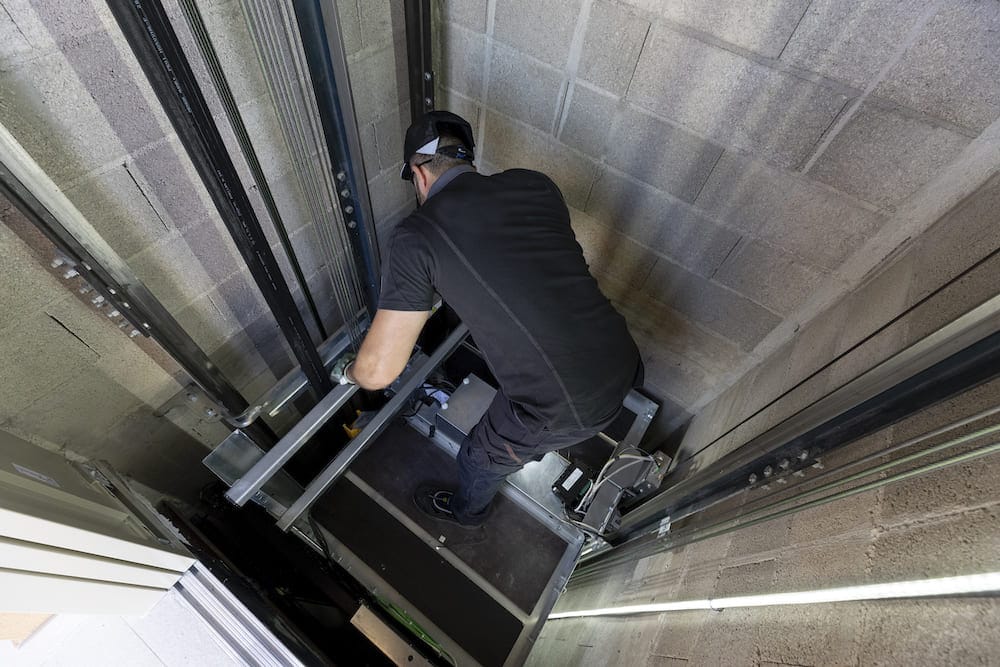
A quiet elevator is one you do not notice. The moment you start noticing it, the problem usually is not the sound. It is what the sound is warning you about.
If you are hearing grinding, rattling, squealing, humming, or you are feeling shaking during travel, you are dealing with elevator vibration issues that can worsen fast if they are ignored. And in high-use Miami buildings, small mechanical issues tend to become repeat service calls because the elevator never gets a real break.
This guide is written for property managers, building engineers, and owners searching for a Miami Elevator Company to help with a noisy elevator Miami residents complain about. We will cover what causes the noise, what patterns matter, what you can safely check, and when the elevator should be taken out of service.
We will also touch on Florida and Miami-Dade compliance basics that matter when repairs go beyond minor adjustments. Florida requires permits for alterations by registered elevator companies through the Bureau of Elevator Safety, and Miami-Dade has its own Office of Elevator Safety jurisdiction for most municipalities in the county.
Why elevator noise and vibration happen
Noise and vibration usually come from one of three categories:
- Friction where parts should move smoothly
- Misalignment where components are no longer tracking correctly
- Wear where a component has reached the end of its useful life
In practical terms, that can mean worn rollers, guide shoes, dirty or dry guide rails, rail alignment issues, loose brackets, traction machine problems, brake issues, rope tension imbalance, or door operator wear.
It can also mean the elevator is overdue for deeper maintenance. Florida’s elevator safety framework emphasizes maintenance and oversight, including the expectation of an active service maintenance contract for safe operation.
Identify the noise pattern first (this makes troubleshooting faster)
Before you call anyone, capture the pattern. The “when” matters as much as the “what.”
Use this quick elevator troubleshooting map.
If the noise happens when doors open or close
This usually points to the door system, not the car ride.
Common culprits:
- Debris in the sill or track
- Worn door rollers or guides
- Door operator belt wear
- Misaligned door clutch or hanger components
- Doors that are dragging or rubbing
Why it matters: door issues create passenger complaints quickly and can lead to nuisance shutdowns if the doors fail to close reliably.
If the noise happens at start or stop
This points to braking, leveling, or acceleration-related components.
Common culprits:
- Brake adjustment issues or brake wear
- Leveling problems that cause a “bump” at the floor
- Traction system irregularities during pickup or slowdown
If you feel a noticeable “step” or bump at landings, that is a ride quality and safety concern. Manufacturers and service literature often flag leveling deviations as a key modernization and safety indicator.
If the noise happens during travel between floors
This is where elevator vibration issues usually live.
Common culprits:
- Worn or misadjusted guide shoes or roller guides
- Dirty, dry, rusted, or contaminated guide rails
- Rail alignment or loose rail brackets
- Traction machine bearing issues
- Rope tension imbalance or sheave wear
Industry training and maintenance references commonly link poor rail lubrication and guide shoe wear to vibration and noise.
If the noise is only on certain floors
This often points to localized rail, bracket, or hoistway conditions.
Common culprits:
- A rail bracket that is loose at a specific zone
- Uneven rail joints
- Localized hoistway debris issues
- Alignment variance through a section of the run
The most common causes of elevator vibration issues
Below is the high-impact list that shows up in real service calls. Each item includes what it usually feels or sounds like.
1) Worn guide shoes or roller guides
What you notice: shaking, rumbling, or a rolling vibration, often worse at speed.
Why it happens: the guide shoes are the contact point between the car and the rails. When worn or misadjusted, contact becomes uneven and vibration increases.
2) Guide rail condition issues
What you notice: scraping noises, intermittent vibration, or vibration that comes and goes.
Why it happens: rails can become dirty, rusted, or contaminated. Lubrication and rail surface condition affect friction. Training references explicitly note that lack of proper rail lubrication contributes to vibration and noise.
3) Loose rail brackets or alignment problems
What you notice: a rattle in the shaft or a knock that repeats, sometimes more pronounced in one direction.
Why it happens: if brackets loosen or rail gauge drifts, the car does not track smoothly. Loose guide rail brackets and rail gauge errors are commonly cited causes of elevator shaking.
4) Traction machine or bearing wear
What you notice: low-frequency humming, grinding, or vibration that feels “mechanical,” not like door chatter.
Why it happens: bearings and rotating assemblies wear. A traction system issue often shows up as ride vibration, not just noise.
5) Brake issues
What you notice: squeal at stop, clunk, or vibration right as the car settles at the landing.
Why it happens: braking surfaces wear, or adjustment drifts. This can affect ride quality and leveling.
6) Rope tension imbalance or sheave wear
What you notice: rhythmic vibration, sometimes paired with slight car sway.
Why it happens: uneven rope tension can create uneven traction behavior, and worn grooves can contribute to irregular motion patterns.
Miami-specific realities that make noise problems worse
Miami elevators do not live in a gentle environment.
- Humidity accelerates corrosion on hardware if the hoistway environment is not well controlled.
- Salt air in coastal zones can speed up rust on exposed components.
- High passenger volume in multifamily and hospitality buildings amplifies small wear issues quickly.
- Deferred maintenance turns into repeat callbacks because vibration issues are often symptoms of deeper alignment and wear.
This is why a “quick fix” approach rarely works. The goal is to identify the source, correct alignment, replace worn components, and bring the system back to stable operation.
What you can safely check (without risking injury or code problems)
Elevator systems are not DIY equipment. Do not access the hoistway, machine room, or top of car unless you are authorized and trained.
That said, there are a few safe steps that make elevator troubleshooting more accurate and speed up the service call.
1) Record the symptom correctly
Capture:
- Which elevator (car number)
- Time of day
- Floors where it is worst
- Whether it occurs during travel, doors, or start/stop
- Whether it happens up, down, or both
- Whether it started after a storm, power issue, or construction event
A short video from inside the car can be helpful, especially if the sound is intermittent.
2) Check for obvious door-sill debris
At the landing, look for visible debris in the sill area. Do not stick tools into moving parts. Basic housekeeping can reduce door drag complaints.
3) Look for pattern triggers
Ask:
- Is it worse during peak traffic?
- Is it worse after heavy rain or humidity spikes?
- Did it begin after a contractor moved materials through the cab?
4) Know when to stop operation
Take the elevator out of service and call immediately if you see:
- Severe shaking
- Grinding that escalates quickly
- Door behavior that traps or nearly traps passengers
- Repeated faults
- Any indication of unsafe operation
Compliance notes that matter in Florida and Miami-Dade
If the fix involves more than minor adjustments, it can trigger permitting and formal requirements.
- Florida’s Bureau of Elevator Safety notes that registered elevator companies must obtain permits before altering elevators, and only qualified agents employed by a registered elevator company can apply.
- Miami-Dade County’s Office of Elevator Safety states it has jurisdiction for elevators and issues permits and Certificates of Operation in most municipalities (with exceptions such as the City of Miami and Miami Beach under their own processes).
- Florida administrative code language emphasizes that maintenance, repair, and replacement must comply with adopted codes.
- Florida also requires annual inspections for licensed conveyances to renew the Certificate of Operation.
If a building is trying to “just patch it” to get through inspection season, vibration and noise issues tend to resurface because the underlying wear is still there.
What a good Miami Elevator Company does to fix vibration and noise
When the ride quality problem is real, here is what a competent service approach typically includes:
- Ride assessment and symptom reproduction (not guessing)
- Door system inspection if noise is door-related
- Guide system inspection for rails, brackets, shoes, and alignment
- Traction or hydraulic system checks depending on elevator type
- Targeted repairs (adjustment, replacement, alignment correction)
- Post-repair ride test to confirm vibration is resolved, not reduced for one day
If your building keeps hearing “it’s normal” while complaints increase, that is usually a sign the diagnosis is not deep enough.
Stop the repeat complaints and fix the cause
If you are dealing with a noisy elevator Miami tenants keep reporting, or ongoing elevator vibration issues that make the ride feel rough, do not settle for temporary adjustments that come back next month.
Work with a Miami Elevator Company that pinpoints the source, corrects alignment, replaces worn components, and restores smooth travel so your building stays reliable and compliant. Book an on-site evaluation and get a clear plan for what is causing the noise, what it takes to fix it, and how to prevent it from returning.
FAQs
1) What causes a noisy elevator in Miami buildings most often?
The most common causes are door system wear (rollers, guides, operators), guide system wear (guide shoes, rails, rail lubrication), and alignment issues (rail brackets, track variance). In Miami’s humid environment, corrosion and contamination can accelerate friction and vibration-related noise. Rail lubrication and guide shoe condition are frequently connected to vibration and noise in maintenance references.
2) Why does my elevator vibrate only when going up or only when going down?
Directional vibration often points to uneven loading, rail alignment variance, or guide shoe adjustment that behaves differently under load. It can also indicate rope tension imbalance or traction system irregularities. A ride assessment that compares up vs down behavior helps isolate the cause.
3) Is elevator vibration a safety issue or just an annoyance?
It can be both. Mild vibration can start as a comfort issue, but if it is driven by worn guide components, loose brackets, or traction system problems, it can escalate into faults, shutdowns, or unsafe operation. If vibration increases suddenly or is paired with grinding, take it seriously and schedule service.
4) What is the fastest elevator troubleshooting step before calling service?
Document the pattern. Note whether the noise occurs during doors, travel, or start/stop, and which floors are worst. This reduces diagnostic time and prevents guesswork. A short video from inside the cab can help capture intermittent sounds.
5) Can building staff fix elevator noise without an elevator company?
Basic housekeeping around door sills can reduce door drag issues, but anything involving the hoistway, rails, machine components, or adjustments should be handled by qualified professionals. Florida’s framework requires registered elevator companies for regulated work and permits for alterations.
6) Do elevator repairs require permits in Miami-Dade?
For many types of alterations and repairs, yes. Miami-Dade’s Office of Elevator Safety issues permits and Certificates of Operation for most jurisdictions in the county, and Florida’s Bureau of Elevator Safety notes permit requirements for alterations by registered elevator companies.
7) Why does the elevator make a loud clunk when stopping?
A clunk at stop often ties to braking behavior, leveling issues, or components settling at the landing. It can also be linked to guide shoe wear that becomes more noticeable during deceleration. If passengers feel a bump when stepping out, have leveling evaluated.
8) How often should elevators be inspected in Florida?
Florida requires annual inspections for licensed conveyances to renew the Certificate of Operation. Buildings may choose more frequent checks based on usage and risk, but the annual inspection requirement is a baseline.