
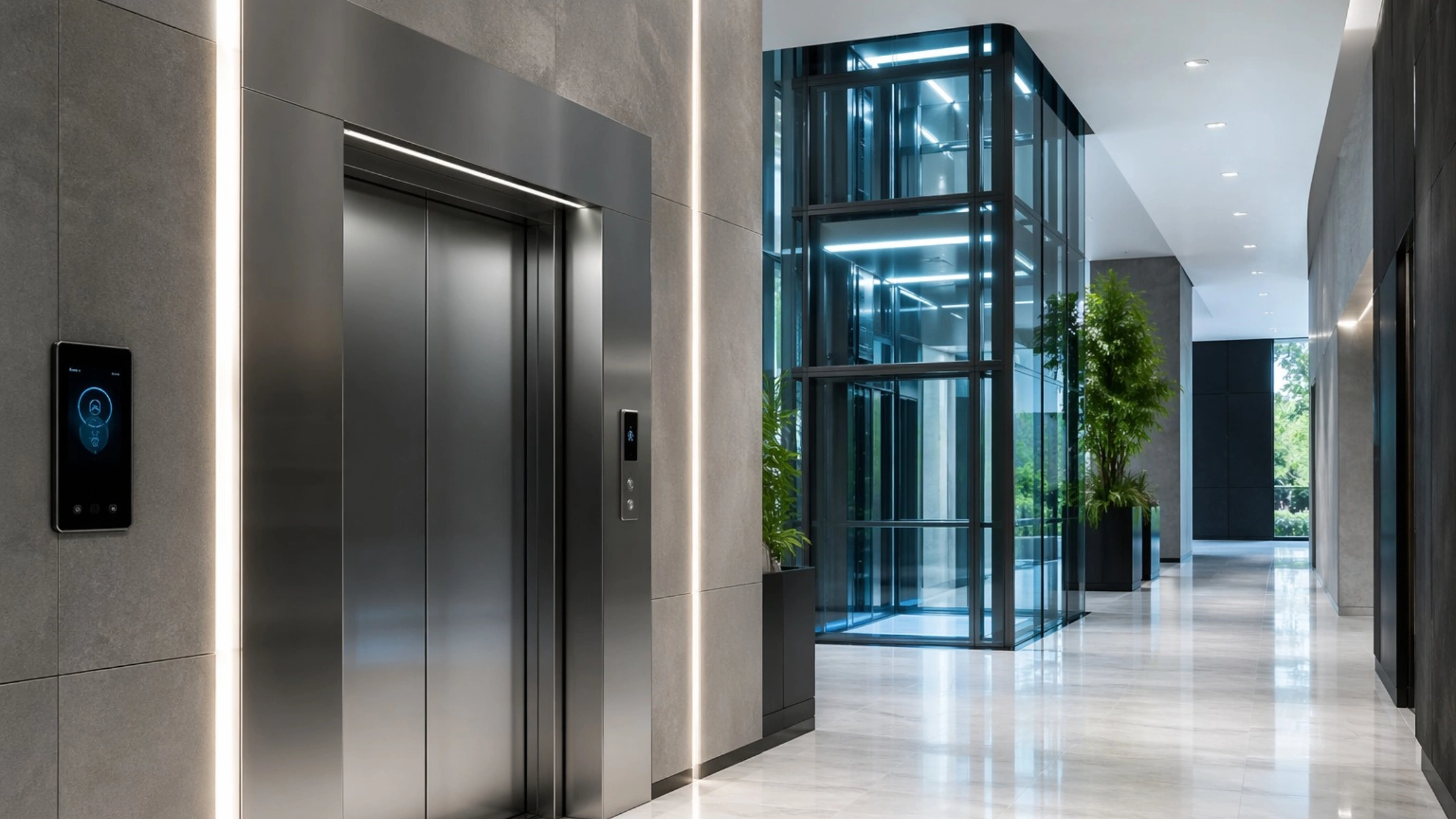
When a Miami property is being designed, repositioned, or retrofitted, the elevator system is one of the most consequential decisions on the spec sheet. It affects construction cost, long-term maintenance expense, energy consumption, and whether the building can actually handle the traffic it was built for.
Yet the hydraulic vs traction elevator debate rarely gets the attention it deserves outside of engineering conversations. Most property owners and developers encounter this decision once, without a clear framework for evaluating it.
This guide gives you that framework. We compare both commercial elevator systems across every dimension that matters for Miami buildings: cost, performance, building fit, maintenance needs, and long-term value. By the end, you will know which system fits your property and why.
Understanding the Two Systems
Before comparing them, it helps to understand what each system actually does.
How Hydraulic Elevators Work
Hydraulic elevators use a fluid-driven piston to move the cab. An electric pump pushes hydraulic fluid into a cylinder, which raises a piston that lifts the cab. To descend, the fluid is released back into a reservoir and gravity does the work.
There are two main configurations:
Conventional hydraulic: The piston sits in a drilled hole below the elevator pit, often extending 20 to 40 feet underground.
Holeless hydraulic: Uses telescoping or side-mounted pistons that do not require underground drilling. More common in retrofits and buildings where soil conditions make deep drilling impractical.
How Traction Elevators Work
Traction elevators use steel ropes or belts wrapped around a sheave (a grooved pulley) driven by an electric motor. A counterweight on the opposite side of the ropes offsets most of the cab’s weight, making the system significantly more energy efficient.
There are two main types:
Geared traction: Uses a gearbox between the motor and sheave. Common in mid-rise applications. More affordable but slightly less efficient than gearless.
Gearless traction (MRL): The motor drives the sheave directly, with no gearbox. Machine room-less (MRL) versions are compact, energy-efficient, and increasingly standard in new Miami construction.
Side-by-Side Comparison: Hydraulic vs Traction Elevator
| Feature | Hydraulic | Traction |
| Best building height | 2 to 6 floors | 5 to 50+ floors |
| Speed | Up to 150 ft/min | 200 to 1,500+ ft/min |
| Energy efficiency | Lower (motor runs constantly on ascent) | Higher (counterweight offsets load) |
| Installation cost | Lower upfront | Higher upfront |
| Machine room required | Yes (for fluid reservoir and pump) | Yes for geared; No for MRL gearless |
| Maintenance frequency | Moderate to high | Moderate |
| Environmental considerations | Hydraulic fluid leak risk | No fluid systems |
| Ride quality | Smooth, but slower | Smoother at high speeds |
| Lifespan | 20 to 25 years | 25 to 35 years |
| Modernization flexibility | Limited above 6 floors | High |
| Miami soil compatibility | Drilling concerns in some areas | No underground drilling needed |
What Miami Building Owners Should Budget
Cost is often the first filter in the elevator types in Miami, FL conversation. Here is a realistic breakdown for both systems.
Hydraulic Elevator Costs
Installation cost: $20,000 to $60,000 per unit depending on configuration, number of stops, and whether the holeless or conventional design is used.
Monthly maintenance: $150 to $500 depending on contract type and building usage.
Energy cost: Higher monthly operating cost because the motor runs at full load on every upward trip with no counterweight assistance.
Fluid replacement and environmental compliance: Hydraulic fluid must be monitored and periodically replaced. In Miami, where environmental regulations around fluid disposal are strict, this adds cost and administrative responsibility.
Long-term repair exposure: As hydraulic systems age past 15 years, cylinder corrosion and seal failures become more common. Replacement parts for older hydraulic systems can be difficult to source.
Traction Elevator Costs
Installation cost: $30,000 to $100,000+ per unit for geared traction. MRL gearless systems often run $50,000 to $150,000+ depending on floors served, speed requirements, and cab finish.
Monthly maintenance: $300 to $800 for full maintenance agreements on traction systems, reflecting the more complex mechanical components.
Energy cost: Significantly lower than hydraulic over time. Gearless MRL systems with regenerative drives can return energy to the building’s electrical grid during descent, reducing net consumption by 30 to 40 percent compared to hydraulic systems.
Long-term repair exposure: Lower over a 25 to 35-year lifespan when properly maintained. Steel ropes, sheaves, and controllers have well-established replacement cycles.
Total Cost of Ownership Over 20 Years
The upfront cost gap between hydraulic and traction narrows significantly when total cost of ownership is calculated. Energy savings, reduced fluid maintenance, longer component life, and lower modernization frequency give traction systems a strong long-term economic case for any building above four floors.
Which System Fits Which Miami Building?
Miami’s building stock is unusually diverse. A single city block can hold a two-story retail strip, a six-floor parking garage, a 12-story mid-rise residential building, and a 40-floor luxury tower. Each of those properties has different elevator requirements.
When Hydraulic Makes Sense
Low-rise residential buildings (2 to 4 floors) For smaller walk-up buildings being retrofitted with elevator access, hydraulic systems offer a lower upfront cost and simpler installation. In Miami’s older stock of two and three-story residential buildings, holeless hydraulic systems are often the practical choice.
Short-travel commercial applications Car lifts, freight elevators, and service lifts in low-rise warehouses or retail buildings are common hydraulic applications. The system handles heavy loads at low speed efficiently.
Budget-constrained retrofit projects When a building needs elevator access to comply with ADA requirements and the budget is the primary constraint, a hydraulic system can get the job done at a lower initial cost than traction.
When Traction Makes Sense
Mid-rise buildings (5 to 12 floors) This is the most common range in Miami’s urban neighborhoods. Traction systems, particularly geared traction and MRL gearless configurations, are built for this segment. They deliver better ride quality, faster cycle times, and lower energy costs than hydraulic at this height.
High-rise residential and commercial towers Above 6 floors, hydraulic systems are simply not viable. Traction is the only option for Miami’s high-rise residential towers, hotel properties, Class A office buildings, and medical facilities. Speed, reliability, and uptime at this scale require traction technology.
Mixed-use developments with high traffic volume When a building has significant daily traffic across retail, residential, and parking functions, traction systems handle repeated cycles more efficiently and with less thermal stress than hydraulic.
New construction across most building types Miami’s new construction market has largely moved toward MRL gearless traction as the default. Lower energy consumption, no machine room footprint, and longer service life make it the preferred choice for developers building to current code and energy standards.
Miami-Specific Considerations That Affect Your Decision
Miami is not a generic market, and elevator installation in Miami, FL involves factors that do not apply everywhere.
Soil and Ground Conditions
Conventional hydraulic elevators require drilling a cylinder hole 20 to 40 feet deep, sometimes deeper. In Miami-Dade and Broward counties, soil conditions vary considerably, and proximity to the water table creates challenges for deep drilling. Corrosion of underground cylinders is a real and documented problem in coastal markets. Many Miami buildings that installed conventional hydraulic systems in the 1980s and 1990s are now dealing with cylinder replacement or conversion to traction as a result.
Holeless hydraulic systems eliminate the drilling issue but are limited in travel distance, typically no more than 20 to 30 feet of vertical travel.
Energy Codes and Sustainability Standards
Miami-Dade County and the State of Florida have increasingly stringent energy codes for commercial buildings. Traction systems, particularly regenerative MRL configurations, align better with green building certifications and energy performance requirements. For developers pursuing LEED certification or meeting Miami 21 energy compliance standards, traction is often the only realistic path.
Hurricane and Flood Resilience
Miami’s exposure to extreme weather creates building-specific considerations for mechanical rooms and elevator pit design. Hydraulic systems with pump rooms and fluid reservoirs have different flood vulnerability profiles than traction systems. Any elevator installation in Miami, FL should involve a licensed engineer reviewing the system design against flood zone requirements and base flood elevation data.
Inspection and Compliance
Both system types fall under the Florida Department of Business and Professional Regulation’s Bureau of Elevator Safety. However, hydraulic systems require additional inspection attention around fluid containment, cylinder condition, and pit drainage. Traction systems have their own inspection focus areas around rope condition, brake systems, and speed governor function. Your Miami elevator company should have clear documentation practices for both.
Final Recommendation: Matching the System to the Building
There is no universally “better” elevator system. The right choice depends on the building’s specific profile.
Choose hydraulic if:
- The building is 2 to 4 floors
- Budget constraints make upfront cost the primary driver
- The application is low-traffic, freight, or ADA retrofit
- Soil and groundwater conditions are favorable
- Long-term energy cost is less of a concern than first cost
Choose traction (geared or MRL gearless) if:
- The building is 5 floors or higher
- Traffic volume is moderate to high
- Energy efficiency and long-term operating cost matter
- The building is new construction or a significant repositioning
- Ride quality, speed, and uptime are operational priorities
- Underground drilling is not practical or desirable
For most Miami buildings being built or repositioned today, MRL gearless traction is the right answer. It delivers the performance, efficiency, and longevity that Miami’s building market demands, at a cost that pencils out over any reasonable hold period. The higher upfront cost is recovered through energy savings, lower maintenance frequency, and a longer service life.
How Clark Elevator Supports Both Systems in Miami
At Clark Elevator, we work with both hydraulic and traction systems across Miami’s full range of building types. That means our recommendation is based on your building, not on which system we happen to prefer installing.
Here is what that looks like in practice:
System evaluation. If you are deciding between hydraulic and traction for a new installation or a conversion, we provide a clear assessment based on building height, traffic projections, soil conditions, and budget. You get a recommendation with the reasoning behind it, not a sales pitch for one system.
Hydraulic service and modernization. For buildings with existing hydraulic systems, we provide maintenance, fluid management, and honest guidance on when conversion to traction makes more financial sense than continued repair.
Traction installation and maintenance. For mid-rise and high-rise properties across Miami, we support traction system installation, commissioning, and ongoing service with documentation that keeps you inspection-ready.
Long-term planning. We help property teams understand their equipment’s remaining service life and plan for upgrades before breakdowns force the decision.
Miami’s elevator market is evolving fast. The right system, installed and maintained correctly, protects your building’s value, your tenants’ experience, and your compliance standing for decades. Clark Elevator helps you get that decision right from the start.
Ready to Find the Right Elevator System for Your Miami Building?
Whether you are evaluating a new installation, considering a hydraulic-to-traction conversion, or simply want an honest assessment of your current system, Clark Elevator is ready to help.
Request a consultation with Clark Elevator today and get clear answers for your specific building.
[Talk to Clark Elevator About Your Property →]
FAQs: Hydraulic vs Traction Elevators in Miami
- What is the main difference between hydraulic and traction elevators?
Hydraulic elevators use a fluid-driven piston to move the cab and work best in low-rise buildings. Traction elevators use steel ropes and a counterweighted pulley system and are suited for mid-rise and high-rise buildings. The two systems differ significantly in speed, energy use, height capacity, and long-term cost. - Which elevator type is better for a Miami high-rise?
Traction elevators are the only viable option for Miami high-rises. Hydraulic systems are limited to approximately six floors, making traction the standard for any building above that height. - Are hydraulic elevators being phased out in Miami?
Not entirely, but their application is increasingly limited to low-rise and specialty uses. New construction in Miami has largely shifted to MRL gearless traction systems due to energy code requirements and long-term performance advantages. - How does Miami’s water table affect hydraulic elevator installation?
Conventional hydraulic elevators require drilling a cylinder hole that can extend 20 to 40 feet underground. Miami’s high water table and coastal soil conditions can accelerate cylinder corrosion over time. Holeless hydraulic configurations avoid this issue but have limited vertical travel. - What is an MRL elevator and is it right for Miami buildings?
MRL stands for machine room-less. These are gearless traction elevators that integrate the drive motor directly into the hoistway, eliminating the need for a separate machine room. They are energy-efficient, compact, and increasingly preferred for Miami’s mid-rise and high-rise new construction. - How much does elevator installation in Miami, FL cost?
Hydraulic systems typically range from $20,000 to $60,000 per unit. Traction systems range from $30,000 to $150,000 or more depending on configuration, floors served, speed, and cab specifications. Total cost of ownership over 20 years often favors traction despite the higher upfront investment. - Can a hydraulic elevator be converted to traction?
Yes, in many cases. Hydraulic-to-traction conversion is a common modernization path for Miami buildings where the hydraulic system has aged past its service life or where the property is being repositioned for higher-traffic use. Clark Elevator can evaluate whether conversion makes sense for your building. - How do I choose between hydraulic and traction for my Miami building?
The decision depends primarily on building height, traffic volume, budget, and long-term operating cost priorities. Buildings under five floors with budget constraints may favor hydraulic. Buildings five floors and above, or those with higher performance expectations, are better served by traction. Clark Elevator can walk you through a system evaluation specific to your property.